
Holiday in Croatia by Car – A Practical Guide
Planning a holiday in Croatia by car? It’s a great idea! Croatia is one of the few countries you can comfortably reach by car from Poland, enjoying beautiful scenery along the way, the freedom of traveling at your own pace, and lower overall costs. In this guide, we’ll share how to get to Croatia, what to pack, what to keep in mind, and where it’s worth stopping on the way.
- Holiday in Croatia by Car – A Practical Guide
How to Get to Croatia by Car – Route and Travel Time
There are several ways to reach Croatia from Poland by car, and the route you choose depends on your starting point and personal preferences. The most popular route runs through the Czech Republic, Austria, and Slovenia – it’s the fastest and most convenient option for most drivers. A drive from southern Poland (e.g., Katowice or Kraków) takes about 10–12 hours without long breaks.
An alternative route goes through Slovakia and Hungary – it’s often less crowded, especially during the high season.
It’s worth planning your route in advance using apps like Google Maps or Mapy.cz. Along the way, you can stop in charming cities like Graz, Maribor, or Lake Balaton – a great way to split the journey and enjoy some sightseeing and rest.
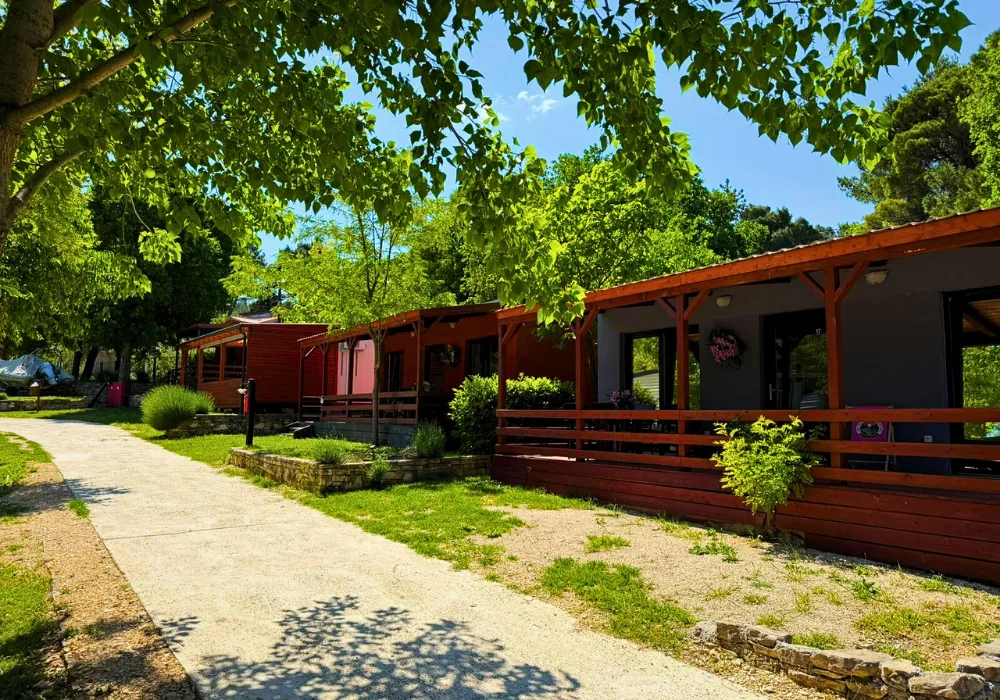
Thanks to the flexibility of traveling by car, you can set your own pace and take breaks whenever you want – especially helpful when traveling with children. And once you arrive, the warm sea, sunshine, and the welcoming atmosphere of Croatian campgrounds await you.
Croatia by Car – Vignettes, Tolls, and Road Regulations
When traveling to Croatia by car through several countries, you need to prepare for different toll systems. In the Czech Republic, Austria, Slovenia, and Hungary, vignettes are required – it’s best to buy them online or at gas stations near the border. Keep in mind that driving without a valid vignette may result in a hefty fine, so it’s not worth the risk.
Austria and Slovenia use an electronic vignette system, while in the Czech Republic and Hungary traditional sticker vignettes are still available. A weekly vignette costs between €10 and €20 – a small price to pay for a smooth journey.
In Croatia, there is no vignette system. Instead, you pay tolls at highway booths. Payments can be made in cash, by card, or with a special ENC device that allows for faster passage through toll gates. Speed limits in Croatia are 130 km/h on highways, 90 km/h on open roads, and 50 km/h in urban areas.
Before your trip, it’s also important to check the mandatory car equipment required in each country – such as reflective vests, warning triangles, or a first aid kit. Driving to Croatia can be a great experience – as long as you’re well prepared!
Where to Take Breaks and How to Plan a Road Trip with Children
A long drive to Croatia doesn’t have to be exhausting – all it takes is good planning. Taking regular breaks every 2–3 hours is key to a safe and comfortable journey. Along the way, you’ll find plenty of gas stations and rest areas (MOPs – Motorway Service Areas) offering restrooms, playgrounds, restaurants, and relaxation zones.
For families with children, it’s a good idea to plan a longer stop halfway through the trip – this could be a hotel, guesthouse, or campsite in Austria or Slovenia. A proper rest break allows you to recharge and helps avoid driver fatigue, which can affect focus and safety.
Useful tools include apps showing restrooms and fuel stations, children’s audiobooks, coloring books, a tablet with cartoons, and snacks within easy reach. During the drive, it’s important to ensure proper ventilation and air conditioning – especially during the summer.
One of the biggest advantages of traveling by car is flexibility – you can take detours, stop in interesting places, or adjust your travel plan at any time. That’s why driving to Croatia can be part of the holiday adventure itself, not just a way to get there.
What to Pack When Driving to Croatia – A Checklist for the Road
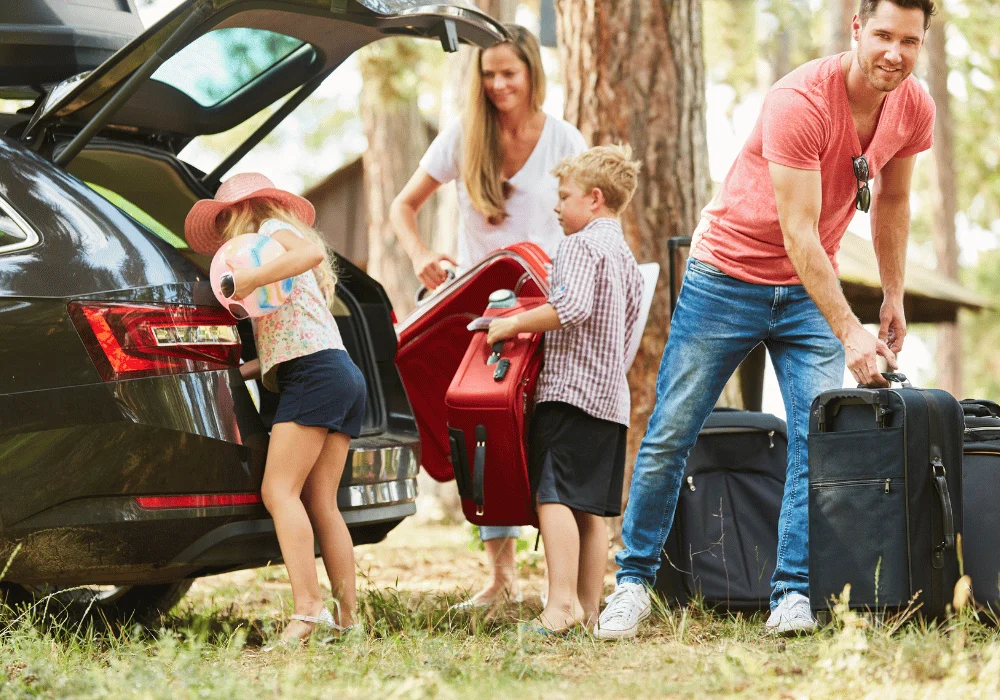
A well-packed car is the foundation of a successful trip. In addition to your standard luggage, it’s worth bringing a few extra items that can be invaluable on the road. If you’re planning a holiday in Croatia by car, make sure to pack your documents (ID/passport, driver’s license, Green Card, liability and comprehensive insurance policy, toll vignettes), as well as the mandatory safety kit: a warning triangle, first aid kit, reflective vests for all passengers, and a spare light bulb.
Don’t forget power banks, phone chargers, a GPS or phone mount, and some cash in euros (as card payments might be limited in some places). Bottles of water, light snacks, travel pillows, and toys or books for children are also helpful. If you’re heading to a campsite, remember to pack an extension cord, flashlight, matches, and basic tools. With good preparation, you’ll avoid unpleasant surprises and enjoy greater freedom and flexibility.
Parking and Getting Around in Croatia – What You Should Know
Once you’ve arrived, it’s helpful to understand the local parking and traffic rules. In Croatia, there are three parking zones: red (most expensive), yellow, and green (least expensive). Payment is usually made at parking meters or via mobile apps. During the high season, finding a free parking spot in popular towns can be challenging—so it’s worth booking accommodation that offers private parking or opting to get around on foot or by bike.
In cities like Zadar, Split, or Dubrovnik, access to historic city centers is restricted—it’s best to use underground or buffer zone parking lots. In some places, you can also rent a scooter or bicycle, which is a great way to explore quickly and affordably. That way, your road trip to Croatia doesn’t end at your destination—your car becomes a convenient way to discover nearby attractions.


Share this article
Do you think this article is valuable? Share it on your social media – let others benefit from it too!